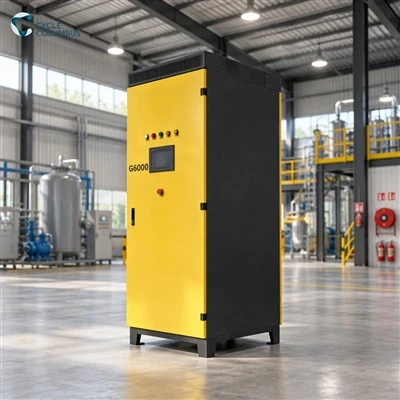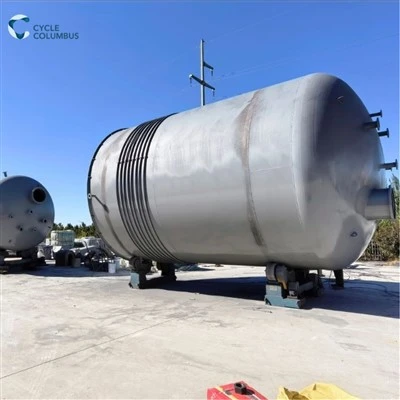


The resource recovery technology for high-strength ammonia-nitrogen wastewater aims to realize the recycling of ammonia nitrogen, heavy metals and other resources in wastewater as well as wastewater discharge up to standard (zero liquid discharge). It features internationally leading core processes, superior integration level, consistently qualified effluent, intelligent AI control system and highly efficient resource recycling. This technology has won 22 scientific and technical honors including the National Technological Invention Award, the National Science and Technology Progress Award, and the Environmental Protection Science and Technology Award.
Core Processes
Breakthroughs have been achieved in key technologies including reagent-enhanced pyrolysis complexation-molecular rectification, design of high-performance proprietary tower internals, scale inhibition and dispersion under high temperature and high alkaline conditions, and full-process automatic monitoring. Core equipment such as the stripping and rectification ammonia removal tower and one-step high-efficiency ammonia water recovery unit have been independently developed. The system realizes simultaneous separation of gas-liquid-solid phases via pyrolysis complexation, mother liquor reaction and separation, ammonia purification and concentration, as well as waste gas absorption and reuse. It ensures stable compliance of effluent ammonia nitrogen, and recovers high-purity concentrated ammonia water, ammonium salt products or liquid ammonia for resource utilization.
Technical Challenges
Heavy metal–ammonia complex ions are stable in nature, making efficient separation and resource recovery extremely difficult.
Based on the difference in relative volatility between ammonia and water molecules, through thermodynamic calculations of the ammonia–water gas-liquid equilibrium, the metal–ammonia complexation–decomplexation reaction equilibrium, and the precipitation-dissolution equilibrium of metal hydroxides, ammonia nitrogen is separated from water in the form of molecular ammonia within the stripping-distillation deammonification tower. It is then discharged from the top of the tower in the form of ammonia-containing vapor, cooled by the high-efficiency ammonia water recovery unit into high-purity ammonia water (or liquid ammonia), which can be reused in production or sold directly, or subsequently fed into an evaporation-crystallization unit to recover ammonium salt products.
Technical Advantages
High ammonia nitrogen removal rate: ammonia nitrogen after treatment ≤5 mg/L, with no secondary pollution
Ammonia recovery rate ≥99.5%; high-purity ammonia water/liquid ammonia (10%–28%) or ammonium salt products can be recovered
Strong resistance to clogging, scaling, and shock loading; precise internal structure; highly targeted system design
Wide operating load flexibility; processing capacity adaptively adjustable within 60%–120%
High equipment integration; simple operation and stable running
AI-based intelligent control; high degree of automation
Application Fields
Non-ferrous metallurgy and rare earths: nickel, cobalt, copper, tungsten, molybdenum, vanadium, niobium, tantalum, zirconium, silver…
New energy: ternary precursor materials, battery recycling, battery energy storage, photovoltaics…
Petroleum and petrochemicals, coal chemical industry: shale oil refining, semi-coke, coal-to-liquids, coal-to-gas, olefin production…
Chemicals and fine chemicals: catalysts, fertilizers, chlor-alkali, waste acid, pharmaceuticals, uranium…
Food, printing and dyeing, and others: brewing, dyes, food additives…
Project Case

2018 Resource Recovery Project for Ammonia Nitrogen Wastewater from Battery Recycling
Completion date: 2018
Influent ammonia nitrogen concentration: 4–8 g/L
Total treatment capacity: >3,000 tons/day
Effluent ammonia nitrogen concentration: ≤8 mg/L