


Produced water treatment technology
Produced water from oilfields generally consists of solid impurities, dissolved gases (CO₂, H₂S, O₂), organic matters such as polycyclic aromatic hydrocarbons, dissolved salts, and microorganisms (SRB, TGB, FB). It is characterized by relatively high temperature, low pH, high salinity, high scaling tendency and strong corrosivity. Reinjection of oilfield produced water is a proper way for rational development and utilization of water resources. When treated produced water is injected into the formation for waterflooding, any substandard injection water may easily trigger a series of problems including reservoir plugging and abnormal rise of injection pressure, which will reduce oil recovery. Therefore, effective treatment of oilfield produced water is highly necessary.
Design Process Flow
Untreated oilfield produced water cannot be directly reinjected and requires treatment. At present, the main technologies for oilfield produced water treatment include physical method, chemical method, biological method and combined treatment method. The comprehensive comparison of each treatment technology is as follows:
|
Process Name |
Technical Principle |
Advantages |
Limitations |
|
Gravity Oil Separation (API Separator, Settling Tank) |
Separate large oil droplets by floating and heavy solids by settling based on oil-water density difference |
Stable and reliable, good shock resistance, no chemical dosage, low CAPEX |
Large footprint; only effective for dispersed oil (>100~150 µm); poor performance for emulsified oil |
|
Hydrocyclone (Tube Cyclone / T-tube) |
Separate dispersed oil (10~50 µm) by centrifugal force |
Compact footprint, fast separation |
Requires stable inlet pressure & flow; only for dispersed oil, ineffective for emulsified oil / polymer-containing water, prone to clogging |
|
Inclined Plate / Tube Oil Separator |
Adopt shallow sedimentation to increase effective separation area and reduce separation height |
Smaller footprint, higher oil removal efficiency than gravity settling |
Almost ineffective for fine oil droplets and emulsified oil; poor shock resistance; plates/tubes prone to sludge accumulation, aging, deformation and collapse during long-term operation |
|
Coalescing Oil Removal (Coalescing Media / Filter Element / Pressure Coalescer) |
Coalesce fine oil droplets into larger ones for easy oil-water separation |
High efficiency for emulsified oil of several to tens of microns, compact, easy skid-mounted integration |
Easy to fail for highly emulsified / polymer-laden wastewater; coalescing media vulnerable to clogging and oil fouling |
|
Flotation (DAF / IAF / CDFU / Electroflotation) |
Microbubbles attach to oil droplets and carry them to the surface for removal |
Removes fine dispersed oil, emulsified oil and TSS simultaneously; mature technology |
Conventional DAF requires chemical dosing; high gas consumption |
|
Filtration (Walnut Shell, Quartz Sand, Modified Fiber Ball, PP Media) |
Mechanical interception + surface adsorption |
Deep removal of oil and suspended solids at the same time |
Media requires regular backwashing and replacement |
|
Electrochemical Pre-oxidation (Electrocoagulation / Electric Demulsification / Pulsed Demulsification) |
Electric-field demulsification, redox reaction, sterilization and polymer removal |
No chemical dosing, no sludge generation |
High power consumption and electrode replacement cost |
|
Advanced Oxidation (Ozone, Fenton, Electro-Fenton) |
Degrade organics via strong oxidation of hydroxyl radicals (·OH) |
Fast reaction, high oxidation efficiency, with sterilization function |
High salinity reduces efficiency; high OPEX |
|
Membrane Separation (Ceramic / Metallic Membrane) |
Sieving by pore size / surface charge to retain oil, colloids and partial ions |
High separation efficiency, stable and good effluent quality |
Membrane susceptible to fouling, difficult backwashing & regeneration, high cost |
The selection of produced water treatment process flow shall fully consider the characteristics of the wastewater as well as the advantages and limitations of each treatment technology. Combined with effluent requirements, different technologies shall be integrated to maximize strengths and avoid weaknesses, so as to adopt a targeted and highly efficient combined treatment process. At present, multi-stage combined physical-chemical treatment remains the mainstream technology for oilfield produced water treatment.
Project Application
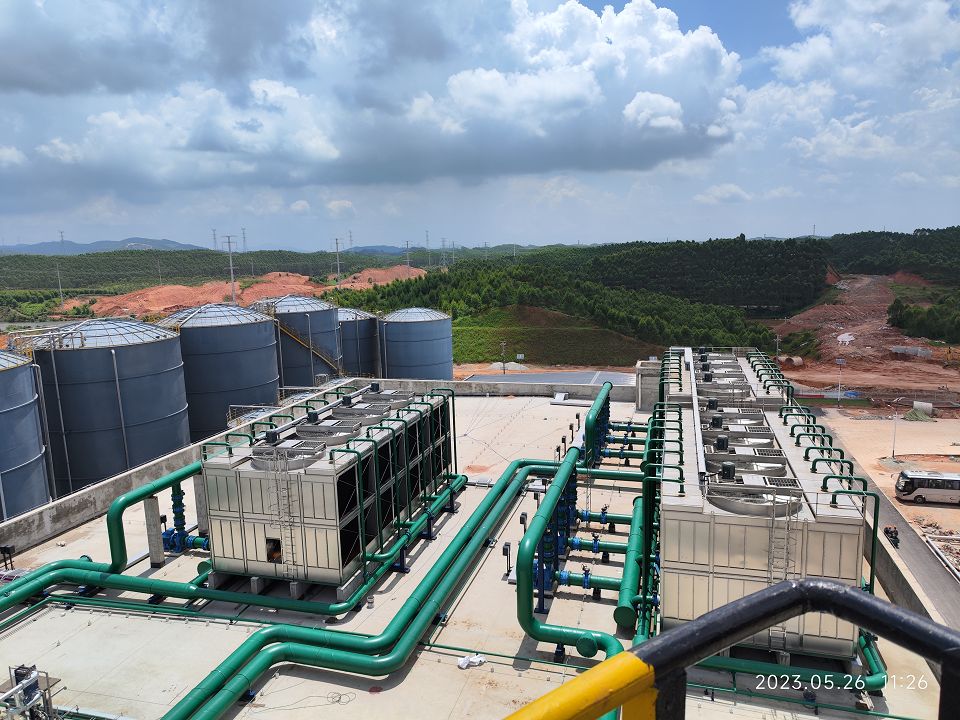
Yulin Coal Science & Technology Development Co., Ltd.
- Capacity: 2600t/d
- Main Process: Resource recovery & zero discharge: pretreatment (oil & turbidity removal) + phenol-ammonia recovery + biological treatment + evaporation crystallization
- Influent Quality: Oil: 2000~3000 mg/L
- Effluent Quality: Oil ≤ 5 mg/L; SS < 1 mg/L