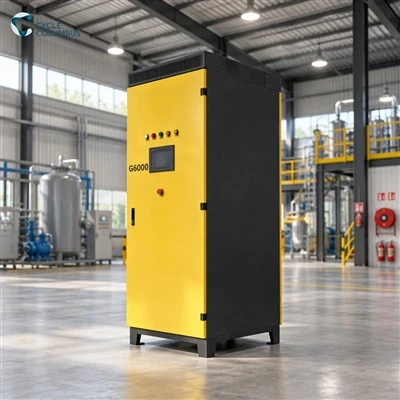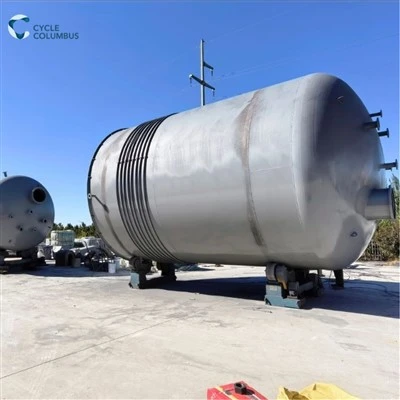


Recently, the project "Integrated Clean Production Technology for Preparing High-Quality Tungsten Products via Short-Process Extraction Method", in which Beijing Cycle Columbus participated, has won the Second Prize of Jiangxi Provincial Science and Technology Progress Award! This award fully demonstrates the important contributions made by Cycle Columbus in the field of green, low-carbon and energy-saving technologies for tungsten smelting, and marks another leap in technological innovation of Cycle Columbus in the field of clean production of non-ferrous metallurgy.

Tungsten is an important national mineral resource, and the green and low-carbon transition of the tungsten smelting industry is of great significance to national economic development. In this project, targeting the problems of high steam consumption, high carbon emissions, and difficult treatment of wastewater and waste residues in the traditional tungsten smelting process, Cycle Columbus developed green, low-carbon and energy-saving technologies for tungsten smelting covering waste gas, wastewater and waste residues, including the waste steam waste heat utilization system under pressure digestion, heat pump energy-saving technology for continuous crystallization and ammonia concentration tower, sulfate wastewater resource utilization technology and comprehensive utilization technology of tungsten residue, to efficiently recover and reuse steam waste heat, condensate water, sodium sulfate and tungsten resources.
Among them, through waste heat recycling, the project reduces natural gas consumption by 1.42 million m³ per year, cuts costs by 5.32 million RMB per year, and achieves CO₂ emission reduction of 2,789 tons per year. Through resource utilization of sulfate wastewater, wastewater discharge is reduced by 148,000 tons per year, with simultaneous recovery of 11,500 tons per year of sodium sulfate by-product and 121,400 tons per year of evaporated condensate water; the neutralization cost is reduced by 600,000 RMB per year, and the sodium sulfate crystallization rate is increased by 13%. Through resource recovery and utilization of tungsten residue, the tungsten recovery rate is raised by more than 1%. The project addresses the industry pain points of tungsten smelting featuring high energy consumption, high carbon emission, high water consumption and high hazardous waste, and provides a replicable and promotable technical paradigm for industrial clean production under the "Dual Carbon" goals.
The project achievement, "heat pump energy-saving technology for ammonia concentration tower", represents the first engineering application of Cycle Columbus's self-developed "heat pump distillation ammonia removal technology" in the tungsten smelting scenario, and is also one of Cycle Columbus's representative innovative achievements in the field of resource treatment of industrial wastewater.
Heat Pump Distillation Ammonia Removal
Aiming at the challenges in resource treatment of industrial high-concentration ammonia-nitrogen wastewater, the heat pump distillation ammonia removal technology is based on the difference in relative volatility between ammonia and water molecules. Adopting the principle of stripping and distillation, the wastewater undergoes multiple gas-liquid equilibrium stages inside the distillation ammonia removal tower under specified temperature and pH conditions. The ammonia nitrogen in wastewater is effectively removed, and ammonia resources are recovered efficiently. On this basis, Zhongke Kanglun introduced the MVR heat pump process into the stripping-distillation technology. While guaranteeing the treatment performance, it greatly reduces steam consumption, circulating water consumption and carbon emissions, and realizes efficient recycling of heat within the system.

Technical Advantages
Excellent treatment performance: The ammonia nitrogen removal rate exceeds 99%. Ammonia nitrogen in wastewater can be reduced from 1–70 g/L to below 10 mg/L in a single step (minimum below 5 mg/L). The effluent quality is stably better than the discharge requirements specified in the national Integrated Wastewater Discharge Standard.
High resource utilization rate: The recycling rate of ammonia resources is over 99%. High-purity concentrated ammonia water (concentration: 10%–28%) or ammonium salt products can be recovered, which can be directly recycled in closed-loop production processes or sold as commodities.
Remarkable low-carbon and energy-saving effect: Compared with conventional distillation ammonia removal technology, steam consumption is cut by 50%–70% and carbon emissions by more than 30%, delivering outstanding energy-saving, carbon-reduction and economic benefits.
Stable and reliable operation: The operating load flexibility of the equipment is expanded from the traditional 70–130% to 20–140%, reaching the leading domestic level. The equipment features strong anti-clogging and anti-scaling capacity, with a tower cleaning cycle of more than 6 months to support long-term stable operation.
No secondary pollution: No wastewater, waste gas or waste residue is discharged throughout the whole process, featuring green, clean and sustainable operation.
High intelligence and integration: Full-process automatic monitoring and skid-mounted integrated design are realized, with rapid response and precise control, greatly shortening on-site construction and commissioning cycles.
Applicable Fields
This technology is widely applicable to the low-cost and resource-oriented treatment of ammonia-nitrogen wastewater in industries including new energy battery materials, nickel-cobalt, tungsten-molybdenum, vanadium, zirconium, niobium-tantalum, advanced materials, rare earths, and spent lithium-ion battery recycling. Nearly 10 demonstration projects have been built in the ternary lithium battery, nickel-cobalt, tungsten-molybdenum and other sectors. These projects achieve efficient cyclic utilization of system heat, helping enterprises recover investment rapidly while cutting costs and boosting efficiency.
Taking a project with a wastewater treatment capacity of 1200 m³/d as an example, after retrofitting with the heat pump energy-saving technology, while retaining the performance advantages of the original distillation ammonia removal system, steam consumption is reduced by 62% and carbon emissions by 46%. It saves the customer more than RMB 5 million in operating costs per year, delivering remarkable economic benefits as well as energy-saving and carbon reduction results. It strongly supports the green and low-carbon transition and sustainable development of key industrial sectors.

In the future, Cycle Columbus will continue to focus on industrial green low-carbon development and resource recycling. The company will keep promoting the in-depth penetration and engineering translation of advanced environmental technologies into non-ferrous metallurgy, new energy battery materials, spent power battery recycling and other industries, contributing to the global green and low-carbon industrial transition.